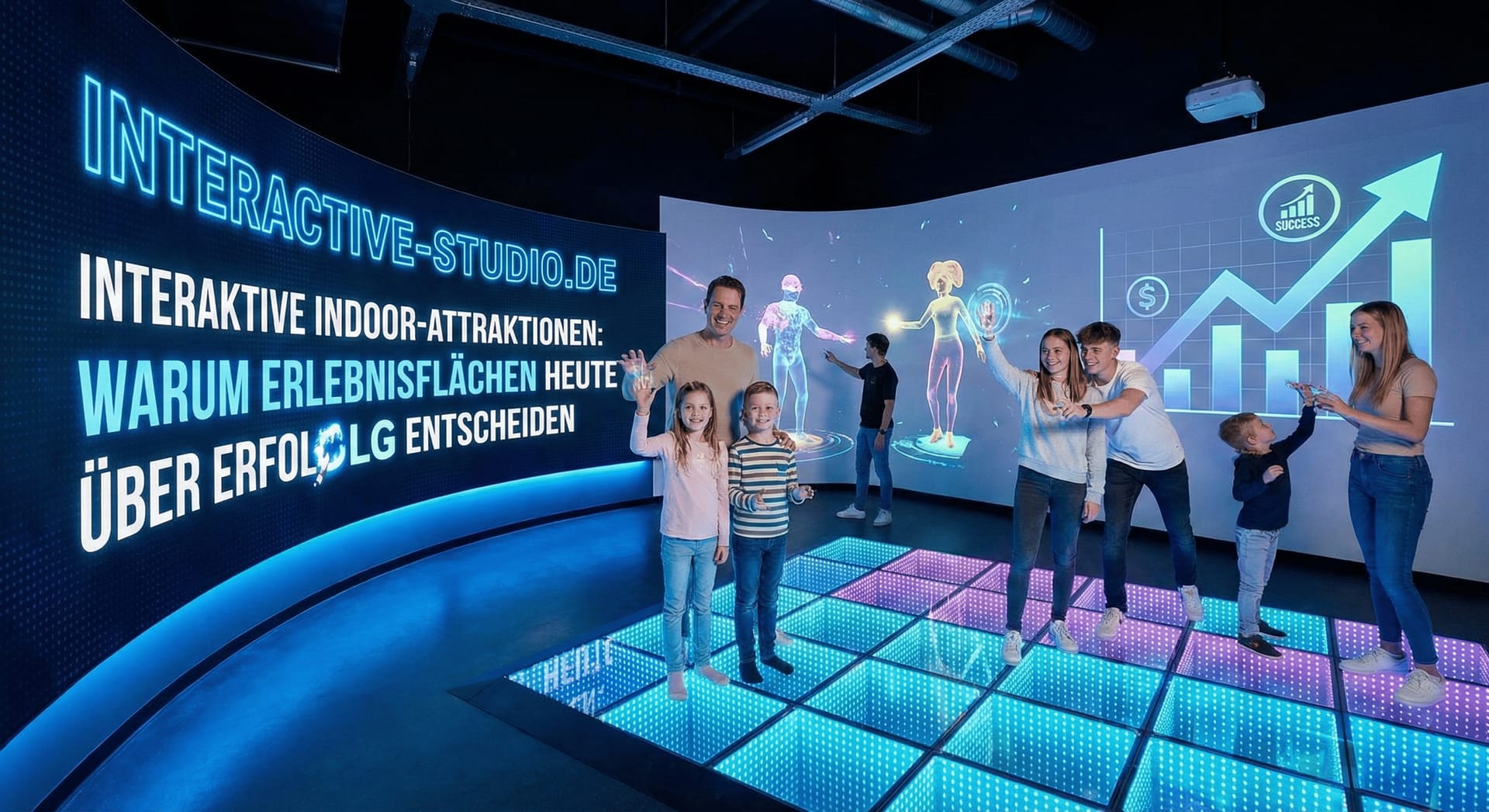
Indoor leisure offerings are undergoing a fundamental transformation. Classic arcade machines, passive entertainment, and standardized concepts are no longer enough to inspire visitors in the long term. What is in demand are interactive attractions that combine movement, technology, and experience, while remaining flexible for different target groups.
This is exactly where modern interactive systems come into play.
Why Interactive Experiences Create Stronger Engagement
People do not remember spaces, they remember experiences. Interactive attractions create active participation instead of passive consumption. Visitors become part of the action. They react, move, make decisions, and compete with each other.
This leads to measurable effects:
Especially in indoor playgrounds, theme parks, family entertainment centers, museums, and event locations, it becomes clear that interactive spaces are clearly preferred.
Technology as an Invisible Experience Enhancer
Modern interactive systems do not rely solely on eye catching technology, but equally on precise integration. Sensors, lighting control, software logic, and robust hardware operate in the background, while the user experiences an intuitive interaction.
Typical technical components include:
-
Touch sensitive or camera based sensors
-
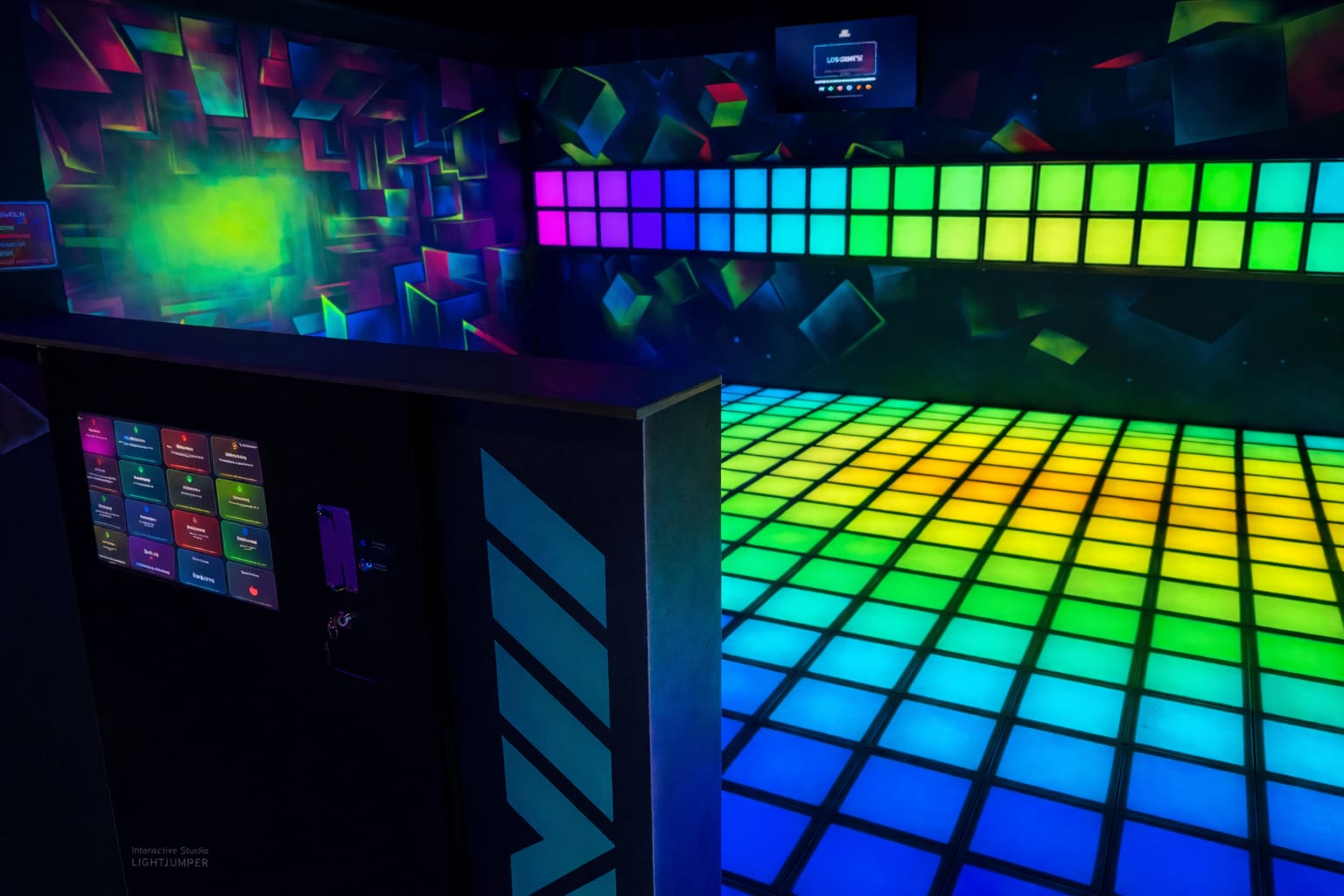
LED floor and wall modules
-
Real time analysis of movement and reaction
-
Modular control systems
-
Low maintenance industrial hardware
The goal is not to showcase technology, but to enable experiences that function reliably and are easy to use.
Interactive Attractions for Different Areas of Application
A major advantage of interactive systems lies in their versatility. They can be adapted to different usage scenarios and grow together with the location.
Typical fields of application:
-
Indoor playgrounds and family entertainment centers
-
Trampoline parks and sports halls
-
Laser tag and action arenas
-
Experience spaces
Through modular concepts, content, difficulty levels, and game modes can be adjusted or expanded at any time.
Economic Benefits for Operators
Interactive attractions are not an end in themselves. They must be economically viable. When properly planned, they offer clear advantages over traditional solutions.
Operators benefit from:
-
Better space utilization
-
Clear differentiation from competitors
-
Additional revenue through events and group offers
-
Lower personnel costs through automated processes
-
Long term investment security through modular expandability
Especially in times of rising operating costs, efficiency is a decisive factor.
Planning Determines Success
The biggest mistake in interactive projects is viewing individual products in isolation. What matters is the overall concept. Room size, target group, traffic flow, safety requirements, and maintenance must be considered from the very beginning.
Professional planning includes:
-
Analysis of space and usage
-
Selection of suitable interactive systems
-
Technical and design integration
-
Training and handover
-
Long term service and support
Only in this way do solutions emerge that prove themselves in everyday operation and remain successful in the long term.
Conclusion: Interactive Experiences Are Not a Trend, but the Standard
Interactive indoor attractions are not a short term hype. They are the logical evolution of modern experience spaces. Those who invest today in sustainable, flexible, and technically well designed systems create the foundation for satisfied visitors and long term economic success.
Interactive Studio develops precisely such solutions: technically precise, seamlessly integrated into the design, and built for real world operation.