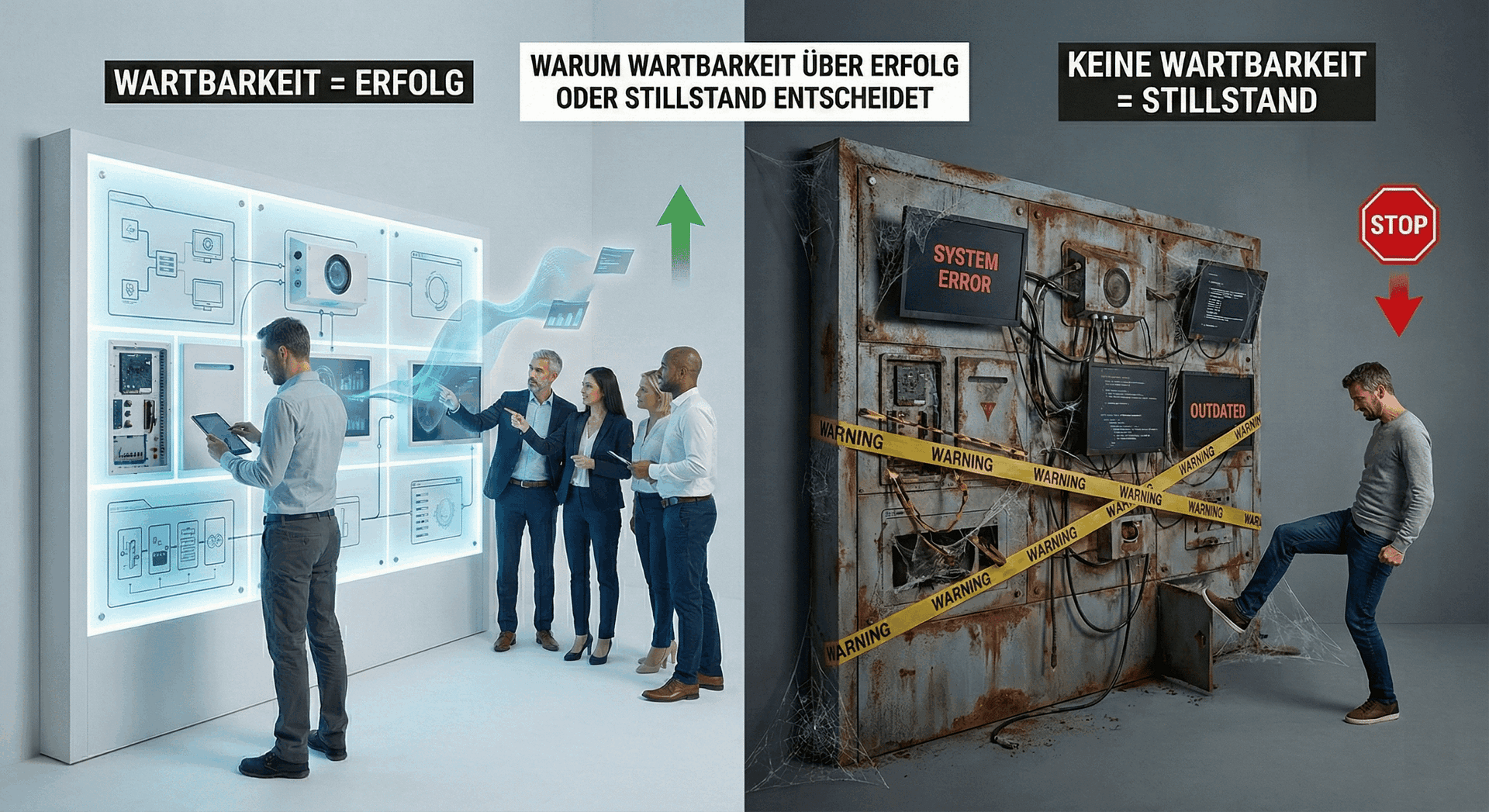
Interactive attractions are often selected based on appearance and game concept. In practice, however, a different factor determines whether a system can be operated successfully in the long term: maintainability. What does not function reliably in day to day operation or can only be maintained with significant effort quickly becomes a burden for operators and staff.
The Difference Between Show Technology and Operational Engineering
Many interactive systems are impressive in the showroom. In everyday use, however, weaknesses become apparent. Cables are difficult to access, components are permanently installed, and software can only be modified by the manufacturer. Any malfunction leads to downtime and frustration among visitors.
Operationally engineered systems are characterized by different properties:
-
Clearly separated modules instead of monolithic constructions
-
Fast replacement of individual components
-
Standardized spare parts
-
Transparent and understandable system logic
The goal is not maximum complexity, but maximum availability.
Downtime Costs More Than Repairs
A system that is not functioning does not only generate repair costs. It directly affects operations. Visitor numbers decline, complaints increase, and staff must improvise. Especially in highly frequented indoor attractions, reputational damage can occur quickly.
Typical hidden costs caused by poor maintainability:
-
Loss of revenue during closure periods
-
Additional staffing effort
-
Reduced customer recommendations
-
Loss of trust among regular customers
A maintenance friendly system therefore pays off not only technically, but economically.
Planning Determines Maintenance Effort
Maintainability does not begin with repair, but in the planning phase. Systems must be integrated in a way that service access is available, components remain accessible, and expansions are possible without dismantling.
Relevant planning aspects:
-
Access to sensors and control units without disassembly
-
Logical cable routing and labeling
-
Software configuration instead of hardware modification
-
Clear documentation for operators
What is saved here will pay off many times over in later operation.
The social dimension of arcade halls
Arcade halls were far more than just places to play. They functioned as social meeting points where interaction, exchange, and shared experiences were at the center. Groups of friends met there after school, families gathered on weekends, and like minded people connected over their shared passion for video games.
The competition for the high score was just as unifying as watching, cheering, and comparing personal performance. Victories were celebrated together, defeats discussed together. These shared experiences created a unique sense of community in which background, age, or experience became secondary. Arcades evolved into social spaces where gaming did not take place in isolation, but as a collective experience.
Low Maintenance Systems Reduce Staff Workload
In many indoor facilities, operational staff handle simple maintenance tasks themselves. Systems that are not designed for this tie up unnecessary resources or require external technicians for minor interventions.
Low maintenance concepts rely on:
-
Self explanatory user interfaces
-
Robust industrial components
-
Automatic system checks
-
Clear error messages instead of unclear failures
This reduces dependencies and increases operational reliability.
Scalability and Maintenance Go Hand in Hand
Systems built in a modular way can not only be expanded, but also maintained more easily. Defective modules can be replaced individually without affecting overall operations. At the same time, the system remains future proof, as new functions can be integrated.
Scalable maintenance means:
-
Replacement instead of complete shutdown
-
Updates without structural modifications
-
Extensions without re planning
This is especially relevant for growing locations and long term concepts.
Conclusion: Maintainability Is Not a Secondary Issue
Systems built in a modular way can not only be expanded, but also maintained more easily. Defective modules can be replaced individually without affecting overall operations. At the same time, the system remains future proof.
Maintainability determines whether interactive attractions perform reliably in daily operation or become a long term problem. Operators who consider this factor early secure stable processes, satisfied visitors, and predictable costs.
Interactive Studio designs interactive systems with exactly this focus: maintenance friendly, operationally reliable, and built for real world use.